
Patriot Tech Services Inc. Blog
Patriot Tech Services Inc. has been serving the Wheelersburg area since 2006, providing IT Support such as technical helpdesk support, computer support, and consulting to small and medium-sized businesses.

In just over a week, Microsoft is retiring two of its most popular operating systems - although this shouldn’t be news at this point. Microsoft has consistently been reminding Windows 7 users that they need to upgrade before January 14, running a major campaign to do so, but there are still a quarter of all desktop users that haven’t done so.
0 Comments

It’s pretty easy to ignore the printers around your office - until they run out of toner/ink, or jam, or just disappear from your network for seemingly no reason. Okay, it’s easy to ignore printers most of the time. Unfortunately, business owners do tend to ignore their printers, and this can get really expensive over time.

New technology can be extremely exciting, but for any business, it can be kind of scary. Implementing technology that isn’t completely established is a major gamble that could have multiple negative impacts. On the other hand, sometimes early adoption of emerging technology will give a business just the boost it needs to blow past projections. Today, we will look at three emerging technologies that the small to medium-sized business will have to consider in the near future.
Microsoft Windows has been a staple of personal computing for almost 35 years. When Microsoft retires their Windows 7 OS in a couple of weeks, they will be left with only two PC OSs functional: Windows 8.1 and Windows 10. Today, we will take a look at the Windows 10 OS and when to expect Microsoft to release a new operating system.

Parker sat at his desk looking at a business card. He watched the snow fall lightly outside his window. He was the last person left in the office, as he typically was this time of year. He put down the business card and got up and walked over to the large pane of glass that was the only insulation from the harsh, cold wintery night. He placed his hand on the window and felt the bitter cold meet the palm of his hand. He stood there for a minute; maybe more than a minute. He began to cry. He was so angry at how things were going.

During the holiday, you will often be put in a position where you need to find some useful technology for co-workers or the ones you love. Today, we take a look at four gadgets that are sure to make even the biggest technophile smile. Let’s get into it.
There was a time when business was run through the printer. These days, there are many digital solutions that can really limit the need for high-volume printing. Today, we’ll take a look at how the average business can cut their printing costs and do it while improving their business using print management.

Email is one of the most valuable tools that a business has at its disposal, but even so, its true value can easily be wasted if it isn’t used to its fullest potential. To avoid this, we’ve put together a few of our favorite ways to streamline your business emails - and maybe fix a few bad habits along the way.

Cybersecurity should always be a priority for a business, and cyber criminals are always evolving their tactics. As a result, it pays to keep an eye on the horizon for the next looming threats. Here, we’re reviewing a few threats that cybersecurity professionals say that businesses should be concerned about in the near future.

Nearly everyone uses Google in some way or another. The search engine is, by far, the most common way people get answers and find content online. The margins aren’t even close, either. Currently, Google handles about 90% of search queries, while the second and third place goes to Yahoo and Bing, who share just below 5% of the search market share.
Google curates the search results on the fly based on a lot of variables including where you are located, what kind of device you are on, and your online surfing habits. This means Google is collecting a lot of information about how we use the web to give us a better experience. Let’s look at how you can control what Google knows about you to better protect your privacy.

Passwords… can be annoying, if we’re being honest. They are, however, also incredibly important to your business’ overall security strategy. We’ve all heard the suggestions on how to create secure passwords. As it turns out, there is more to modern security then that. Let’s explore a few options to help you create useful passwords, and take a look why passwords are only the beginning.

Cybersecurity is becoming a massive issue for every organization due to the immense amount of data breaches that take place regularly. Businesses of all types are looking at strategies to protect their sensitive customer and employee data from hackers, malware, and any other potential danger. The problem is it’s not always as simple as just implementing cybersecurity software.

Automation is sometimes misconceived as a troublesome or unreliable addition to business. It’s not about replacing people with machines, it’s about getting more done with the people you have. Having an attitude that doubts technology and believes nothing can replace human processing can quickly put you at a disadvantage compared to your competitors.

As hokey as it sounds, the Internet almost transcends other pieces of technology. While estimating the economic impact of the Internet is a formidable feat, Cisco came up with 19 trillion dollars - 21 percent of all the money in the world. So, with access to a resource this valuable, it’s silly not to make the most of it.

With Black Friday, Cyber Monday, and the gift-giving holidays rapidly approaching us (can you believe 2019 is almost over? I feel like I just stopped writing 2018 on my checks!), it’s time to take a look at how we can be as safe as possible while shopping on the Internet.
Email remains an incredibly useful tool in the business setting, assisting with a wide variety of communication needs. However, in order to make the most of your emails, you need to have an email client that permits you to do so. Here, we’re pitting two major email clients against each other to see which one offers the features that best suit your business and its needs.

I want to start this article out by admitting that there are a lot of active threats out there these days. There are hackers--hacking collectives, actually--that’s whole purpose is to infiltrate businesses and steal data, money, and most often, the trust people have in their technology. One way to help keep your stuff secure is by relying on two-factor authentication.

Most people have acquired much of their familiarity with what a hacker is through the mixed representation seen in pop culture today… but does this impression match up to a hacker in real life? Popular entertainment unfortunately doesn’t differentiate between different hacker types and their motivations very well, so that’s what we’ll handle here.
Understanding Hackers, Based on Motive
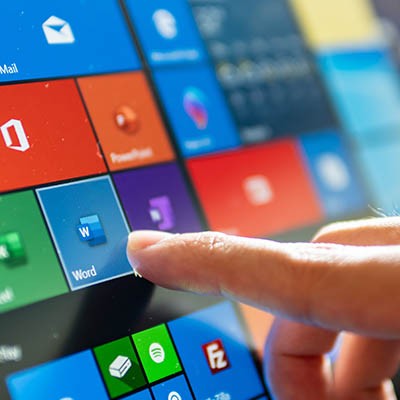
You’d be hard pressed to find anyone who works on a computer who hasn’t used at least one of the applications in Microsoft Office. Office has been a staple for professionals, students, and home users for decades. Over the last few years, Microsoft has reinvented how businesses can collaboratively use Office to improve productivity, security, and adhere to compliances.

Any project that your business undertakes will have its success defined by the particular goals you have set for it. This means that each project will be different, its own concerns and considerations coming into play. However, when it comes to managing these projects, most of them benefit from largely the same practices. For this week’s tip, we’re reviewing three that every project should incorporate.
News & Updates
Businesses will often go into the process of self-improvement with unrealistic expectations for how much they can significantly improve their functionality. This simply is not true, and sometimes business owners need to realize that real change—the k...
Understanding IT
Get the Knowledge You Need to Make IT Decisions
Technology is constantly evolving, and keeping up can feel overwhelming. Whether you want to understand cybersecurity threats, explore automation, or learn how regulations like PCI DSS impact your business, we’ve made it easy to access clear, straightforward insights on key IT topics.
Contact Us
Learn more about what Patriot Tech Services Inc. can do for your business.
Patriot Tech Services Inc.
578 State Route 522
Wheelersburg, Ohio 45694