
Patriot Tech Services Inc. Blog
Patriot Tech Services Inc. has been serving the Wheelersburg area since 2006, providing IT Support such as technical helpdesk support, computer support, and consulting to small and medium-sized businesses.


You might be shocked to find out that your mobile device holds a considerable amount of personally identifiable information on it. This has prompted many users to secure their phones at all times, but others simply ignore the threat and brush it aside. Since Google makes it so easy, there’s no excuse for Android users not to secure their devices. Here’s how you can do it.
0 Comments

With a meager market share that is one-third the size of Google’s, one would think that Bing would be trying to keep controversy away from a user’s search results. However, the Microsoft search engine has recently encountered a few notable PR disasters that may be enough to convince some not to use it - especially if it leads to a security breach.

Hackers have always gone after industries that are profitable, or hold sensitive information that can be lucrative when sold under the table. As such, retailers that accumulate financial credentials are often hit by hacks. The entertainment industry is no different, and hackers continue to grow craftier in their pursuit of wealth and power. Not even Steam, the PC gamer’s most valuable software solution, is safe from the dangers of hacking attacks.
 There’s a reason why IT professionals think that the Internet of things is a major security discrepancy. Around 5.5 million new devices are being connected to the Internet every day, and are giving security experts a run for their money. The Internet of Things and its devices could potentially become a security hazard for businesses that aren’t prepared to protect their assets from hacks.
 Administrator privileges. It’s not a flashy IT-related topic that gets reported on a whole lot. Due to the critical role it plays in protecting your network, administrator privileges should be front and center with every company’s network security plan. Especially since a recent study was published relating the majority of Windows operating flaws to mismanaged administrator privileges.
 The Internet of Things is constantly growing. Seemingly every commercially-available product now has a corresponding app or some sort of connectivity to the web. As this entity grows bigger still, you begin to see things that have very little intrinsic value coming with Internet connectivity.
 A very large shift has taken place in the annals of baseball. The “Moneyball” revolution has produced a dependence on analytics, both for measuring individual player performance and for overall team makeup. This shift has now presented at least one Major League Baseball franchise with major data security questions.
 We talk about a lot of frightening technology scenarios for businesses; data loss, identity theft, and expensive hardware failures that can inflict substantial downtime and, therefore, cripple the ability of your business to sustain operations. One industry that has changed the way they manage risk, specifically the potential failure of important security systems, is the nuclear power industry. Any business can learn how to mitigate disaster by looking into the specifics of the two most horrendous nuclear meltdowns in history, the meltdown at Chernobyl in 1986, and the tsunami-induced disaster at Fukushima in 2011.
 If you are a technician and a network you are responsible for begins to go down because the traffic that is coming into the network is unusually high, there is a good chance you are experiencing a distributed denial of service attack, or DDoS. These attacks, which are extraordinarily difficult to prevent altogether, can be exceedingly costly for a business.
 Implementing proper IT solutions is challenging for the average SMB, and it’s difficult without the aid of a proper IT department. Organizations that can’t afford a full in-house IT department sometimes resort to less savory methods of managing their technology, which can be dangerous for business continuity, data storage compliance, and security.
 Whenever hackers show themselves, they always spell trouble. Whether it’s stealing credentials or completely taking over someone’s computer, a hacker has a plethora of targets and methods that can be irritating for the average PC user, or business executive. In fact, hackers are so crafty that they can even hack into hospital equipment.
 Password security is a common problem that businesses that take their cybersecurity seriously have to deal with on a regular basis. Passwords need to be complex and difficult to guess, but easy to remember at the same time. Unfortunately, these two goals don’t go hand-in-hand, and as such, users often have to sacrifice one for the other. The “passpoem” is a concept born to resolve this issue, though it takes a pretty roundabout path of doing so.
 A recent trend in cybersecurity is the omnipresent threat of ransomware and distributed denial of service attacks (DDoS). With hackers out to get you and your business, you need to stay updated on how to take the fight to these extortion masters. Unfortunately, victims who have become targets of ransomware, DDoS attacks, and other kinds of threatening hacker activity, often feel that “paying the piper” is the best way to resolve the issue. Well, we have news for you: it isn’t.
 We write about cyber security all of the time, and for good reason. You need to be sure that your organization’s defenses are bulletproof, or at least optimized for maximum security. A recent debacle in the United States serves as a reminder that even high-level, super-secret government accounts can be hacked, like this story from the Central Intelligence Agency (CIA).
 Mobile exploits are just as common as those found on legitimate operating systems like Windows, but many people just don’t understand this simple fact. However, this hasn’t stopped some folks from being cautious when using their devices. The latest exploit making the rounds, which takes advantage of the iPhone’s Siri or Android’s Google Now, will leave you speechless.
 October is Cyber Security month. We want to bring attention to this very important issue affecting every person and organization connected to the Internet. When discussing cyber security, we often talk about computer viruses and malware, but these threats are only part of the cyber security equation. It’s just as important that you, your staff, and even your family, are mindful to not overshare information online that can compromise your organization’s security and personal identities.
 The social media revolution has taken the world by storm, so much in fact that some people are completely at the mercy of their smartphones. However, the dark side of social media, especially Facebook, grows more apparent every day, especially when it comes to both cybersecurity and personal privacy. Are you sure that your Facebook settings aren’t giving away a little too much of your information to the powers that be?
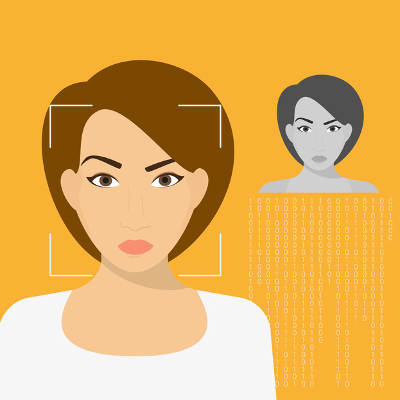 With plenty of new features to throw around, Windows 10 is shaping up to be quite the operating system. One feature that seems to have fallen off of everybody’s radar (so far) is Windows Hello, a brand new way to authenticate your PC login. By taking advantage of biometric scanning, your computer will let you log in just by looking at your face.
 When it comes to the security of your company’s network, you need to have a strike plan to get you out of any potentially threatening situations. Essentially, your network needs an email security solution like a spam filter to act as a sheriff for your business.
 In this day and age, a password isn’t enough to keep your accounts secure from attempted hacks. Passwords can be cracked as easily as anything. A lot of businesses have moved to two-factor authentication in order to preserve their data. There are several ways of using this for your business, but a new startup called BioCatch is developing an authentication procedure which looks at your mouse activity.
News & Updates
Businesses will often go into the process of self-improvement with unrealistic expectations for how much they can significantly improve their functionality. This simply is not true, and sometimes business owners need to realize that real change—the k...
Understanding IT
Get the Knowledge You Need to Make IT Decisions
Technology is constantly evolving, and keeping up can feel overwhelming. Whether you want to understand cybersecurity threats, explore automation, or learn how regulations like PCI DSS impact your business, we’ve made it easy to access clear, straightforward insights on key IT topics.
Contact Us
Learn more about what Patriot Tech Services Inc. can do for your business.
Patriot Tech Services Inc.
578 State Route 522
Wheelersburg, Ohio 45694