
Patriot Tech Services Inc. Blog
Patriot Tech Services Inc. has been serving the Wheelersburg area since 2006, providing IT Support such as technical helpdesk support, computer support, and consulting to small and medium-sized businesses.


Having success in business often relies on developing trustworthy relationships. You have to trust your vendors and suppliers to get you the resources you need, you need to trust your staff to complete their tasks without putting your business in harm's way, and you need to trust your customers to buy the products and services that you offer. Running counter to these necessary bonds of trust are people actively soliciting people’s time, energy, money, and attention for their own selfish purposes.
0 Comments
When it comes to ransomware, we have always stood firm in our recommendation not to pay whoever is responsible for locking down your systems. However, due to the globalized nature of technology and cybercrime, it is even more important that companies don’t attempt to placate their attackers with the demanded funds. Otherwise, warns the United States Treasury Department, these victimized businesses could very well pay severe fines for doing so.

As a communication tool, the video conferencing app Zoom saw a considerable bump in its popularity with both personal and business users as the coronavirus pandemic made other means of meeting no longer viable. However, this sudden increase in its user base also revealed some serious security issues with the platform. Let’s examine what Zoom has done to resolve these issues since then.

Business relationships, especially between you and a service provider or you and a coworker, are crucial to a business’ success. However, maintaining these relationships can be challenging when there’s a good chance that your actions might create more work for another person. Let’s go over why your relationship with IT may be strained, and offer a few tips to help fix it.
If you’ve been reading this blog for any length of time, you’ve seen us reference a phishing attack. Whether you are being asked by some supposed Nigerian prince to fork over money or you are getting an email by what seems to be your bank that directs you to download an attachment, you are probably a potential victim of a phishing scam. The difference between being a potential victim and a victim is knowing how to identify it. Today, we’ll give you five ways to identify a phishing message so that you—or your company—won’t be scammed.

Smart assistants commonly appear in the office and home, so much so that the novelty seems to have finally worn off and they are now just another appliance—and, like any other appliance, there are a few quirks that can be frustrating to deal with. For instance, anyone living around these devices has shared a particular experience: the device registering something as a wake word that certainly wasn’t meant to be the wake word.
Telework has become crucial for businesses to sustain themselves right now, as remote work became a hard and fast requirement in the face of the coronavirus. However, if businesses aren’t careful, they could trade one issue for another in exposing themselves to security threats.

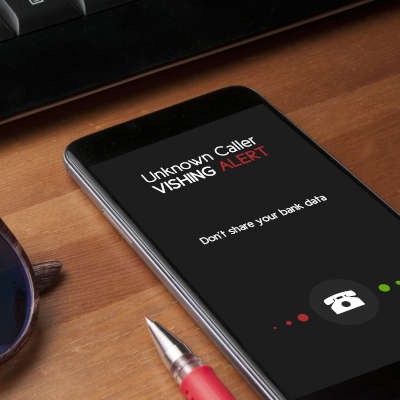
Since the onset of the coronavirus, many businesses have managed to sustain themselves through remote work—also commonly known as telework. While this strategy has allowed quite a few businesses to survive, it has also opened them up to security threats. Here, let’s focus on one such threat: vishing, or voice phishing.

If I were to tell you that one variable was responsible for more than 80 percent of cyberattacks, what would you guess that variable was? If you guessed “stolen access credentials,” you’d be correct. The traditional username/password combination may soon be a thing of the past as more tech companies transition to alternative authentication measures.

We’ve not been shy about promoting the use of VPNs (virtual private networks) as a means of protecting your security while you are online. However, we wanted to take a bit of time to specify what a VPN can - and cannot - do to help you.

When we think of cybercrime, most people’s minds go to one of two places. On the one hand, some think about the annoying, misspelled emails that are so obviously scams, while on the other, we can’t help but think about the hacks that we see in movies, where a criminal manages to overcome the best the government can incorporate into their defenses.
Ransomware is the scariest type of malware out there. It can have a myriad of negative effects on a business, yet it seems to still be on the fringe of the mainstream. Today, we thought we would give somewhat of a refresher course on ransomware.

The password is the core element of both data security and user authentication. This makes the construction of them extremely important to protecting digital assets. Unfortunately, not everyone understands how to construct passwords that actually work to protect the information on the other side. Today, we will discuss how to build a solid password that works to keep your digital resources safe.

With COVID-19 creating an unsure situation for so many businesses, and by extension their employees, these employees are suddenly finding themselves in a vulnerable position. Regardless of whether or not your employees are able to come into the office right now, it is important that you share the following information with them, as it may help to keep them out of a tough spot.
With the COVID-19 crisis far from over, many businesses have had their attention pulled away from their cybersecurity needs by the concerns that the current health crisis has generated. Here, we’ll be reviewing some of the observations that a group of 273 cybersecurity professionals have made, courtesy of an annual survey.

As the COVID-19 pandemic rolls on, many businesses continue to operate remotely with an eye toward reopening their office soon. Today, we thought it would be a perfect time to go over a couple of things that small business owners will need to address as people begin coming back into the workplace.

A security audit is designed to test the overall integrity of your business when it comes to its IT security. In today’s environment, businesses need to have strengthened fortifications in place to protect themselves from cyberthreats, and these fortifications need to be properly tested and reviewed over time. Let’s talk about some of the types of audits and their benefits, and how you can assess your security.
Starting in 2008, Verizon has produced a report outlining the cybersecurity incident trends that the previous year demonstrated. In doing so, they have provided a resource that gives businesses greater insights into where their cybersecurity efforts need to be focused. Let’s go over some of 2019’s trends and insights that were highlighted in the Verizon Business 2020 Data Breach Investigations Report (DBIR).

Conferencing has been an important tool for businesses as stay-at-home orders have moved their operations out of the office and into worker’s homes. While there are dozens of video conferencing solutions on the market, businesses should consider security just as much as they consider functionality. Today, we’ll take a look at security for your company’s conferencing solutions.
At any given time, a business needs to consider its security, but this need only exacerbates when its employees are working remotely. With the coronavirus pandemic still in play, the likelihood is that your employees are in this situation has risen dramatically. In order to maintain your organizational security, you need to consider the many factors that a remote workforce can introduce.
News & Updates
Businesses will often go into the process of self-improvement with unrealistic expectations for how much they can significantly improve their functionality. This simply is not true, and sometimes business owners need to realize that real change—the k...
Understanding IT
Get the Knowledge You Need to Make IT Decisions
Technology is constantly evolving, and keeping up can feel overwhelming. Whether you want to understand cybersecurity threats, explore automation, or learn how regulations like PCI DSS impact your business, we’ve made it easy to access clear, straightforward insights on key IT topics.
Contact Us
Learn more about what Patriot Tech Services Inc. can do for your business.
Patriot Tech Services Inc.
578 State Route 522
Wheelersburg, Ohio 45694